How Is a Garage Floor Coating Installed
On a slab that has soaked up years of oil and tire residue, every step after grinding takes longer, and the order of work on a Riverside, CA garage floor (as laid out in the notes at garage epoxy floor coating riverside ma petite serie deco) does not change: clear, grind, repair, mix, spread, broadcast, cure, seal. Each step sets up the next one. Skipping ahead shows later as peeling, pinholes or a soft edge at the door.
Clearing and grinding the slab
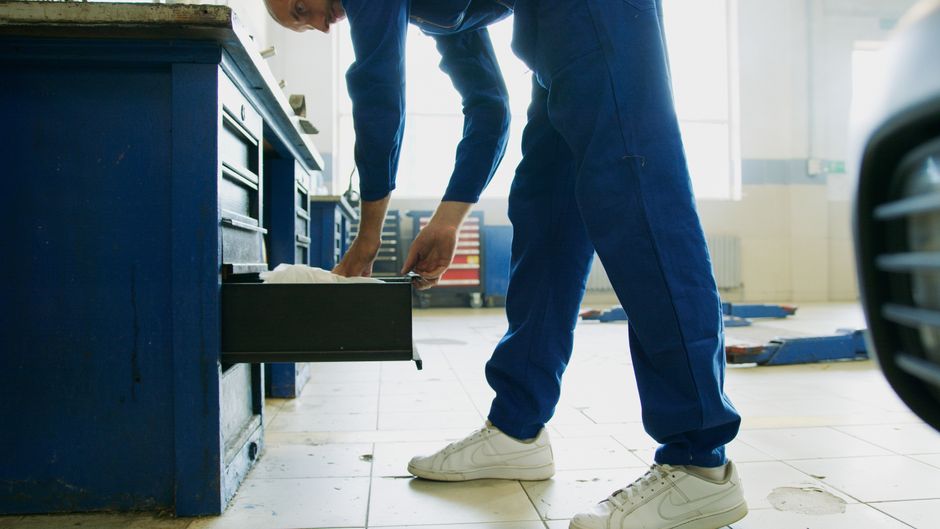
Work starts with the garage emptied down to bare concrete. Diamond grinding comes next, using a planetary grinder with a vacuum attached, which opens the surface so the primer and base coat can grip. Grinders cannot reach into corners or along the wall line, so those edges are cleaned out with smaller handheld tools. Dust is vacuumed, not swept, because fine powder left behind acts like a release agent under the coating.
Cracks, pits and control joints
Repairs happen after grinding, not before. Grinding opens the crack faces and pit walls, so the repair material bonds to freshly opened concrete instead of dirty surface paste. Cracks are cleaned out and filled flush, pits are packed, and control joints are treated so they will not telegraph through the finished floor. The patches are then leveled or lightly ground so they do not show as ridges.
Mixing and the base coat
Two part materials begin reacting the moment the parts are combined. That is why batches are sized to what can be applied within the pot life, not to what is convenient to pour. Warm afternoons in the Inland Empire and dry Santa Ana winds shorten working time further, so the batches get smaller. The base coat, whether epoxy or polyurea, is spread with squeegees and back rolled to an even thickness measured in mils. A wet film gauge settles any argument about coverage.
Broadcasting the flake
In a full flake system, vinyl flake is thrown into the wet base coat until it cannot accept more. Installers call this broadcast to rejection. The flake is not only color. It builds texture underfoot and hides small flaws in the slab. Quartz sand and metallic pigment systems follow the same wet-on-dry logic, and a solid color job skips the broadcast entirely. After the base cures, loose flake is scraped and vacuumed off before anything goes over it.
Topcoat, recoat windows and return to service
The clear coat locks the flake in and gives the floor its wear surface, usually urethane or polyaspartic. Every product has a recoat window on its data sheet. Coating outside that window can mean sanding to get intercoat adhesion, which adds a day. Extra coats do not make a stronger floor on their own, only the correct film thickness does. Light foot traffic and vehicle traffic have separate return to service times, and the car is usually the last thing allowed back in.